

Match Programmes and the Lost Language of the Game
The soul of football, bound and stapled

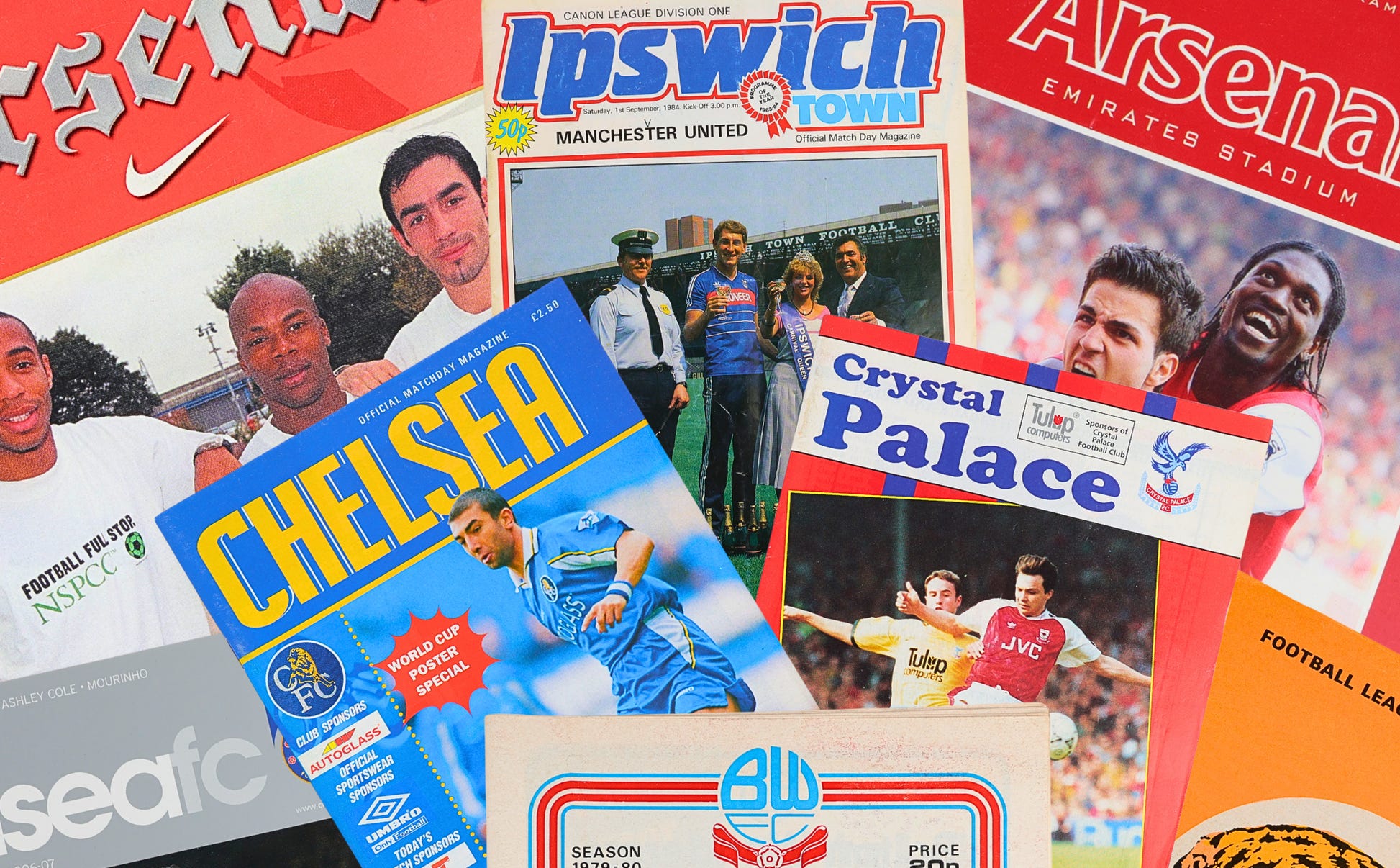
Before line-ups lived on screens, they lived in our hands.
The Rustle Before Kick-Off
Every programme told a story, printed in blue ink and smelling faintly of rain and chips.
Before phones glowed and QR codes blinked, the matchday ritual began with paper. You would hand over a few coins outside the turnstile, the seller’s voice lost in the crowd’s hum, and walk through the gate clutching something that felt important. Inside that thin, stapled booklet was the entire world of a Saturday afternoon.
My first programme came at Oriel Park on a wet night when Dundalk faced Shelbourne. My uncle lined out for the Lilywhites, and I walked beside him as mascot. I remember holding the programme tighter than his hand, afraid I might drop either. The ink ran slightly where the drizzle caught it, and I kept that smudged copy for years, its corners curled, the score written in biro.
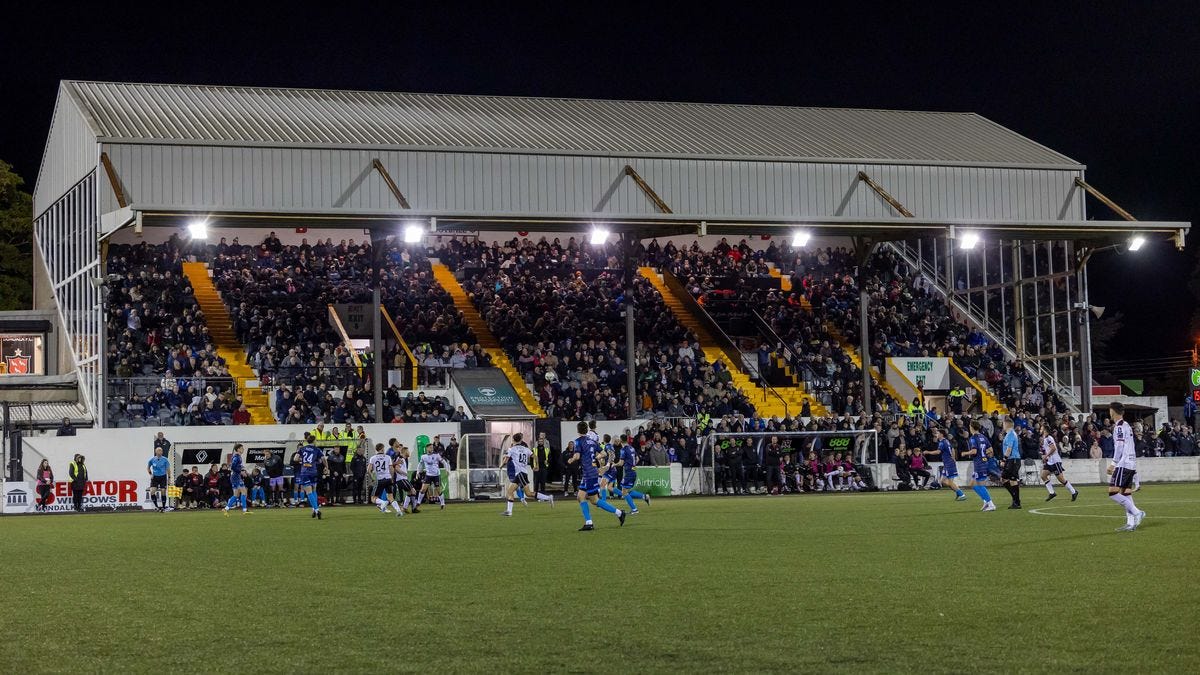
You would flick through it while finding your seat. The cover art sometimes heroic, sometimes dreadful, maybe a stock photo of a striker mid-volley or a clip-art crest floating over clouds. It did not matter. The programme was not judged like a magazine. It was a promise that you belonged somewhere, for ninety minutes at least.
The Printed Heartbeat of Clubs
At Oriel Park, Dalymount, Tynecastle or Highbury, the language was the same. The “Manager’s Notes” began with optimism, dipped into realism, and ended with gratitude. The captain’s column thanked the fans. A kid from the youth team had his headshot printed beside a sponsor logo for a local electrician.
In Dundee, the ArabZONE pages mixed player profiles with doodles from school competitions. At Roma, 1970s issues glowed gold and crimson, their typography as romantic as the club itself. Celtic’s View carried prayers, predictions and poetry. Even the smallest club, Finn Harps, Ayr United, Chesterfield, made sure the print run happened. No programme, no matchday soul.
Each one was a miniature newspaper but freer. It was not written to impress; it was written to connect. A committee man’s typewriter rhythm could be felt in every comma. You could tell if he had a pint while writing it.
Football programmes were perfectly imperfect. Fonts changed mid-page. Photos bled into margins. Someone always forgot to credit the photographer. Yet there was character in every misstep.
Open one from the 1990s and you would find cigarette ads beside anti-smoking campaigns. The back page might sell raffle tickets, wedding packages or a second-hand Ford Escort. Some carried small columns titled “From the Physio’s Bench” or “Junior Corner.” They were stitched together by volunteers who loved the club more than any editor could.
And in that pre-digital world, this was how stories spread. Rumours about transfers, half-true injury updates, even recipes. Fans did not scroll; they read, folded, underlined.
The Souvenir You Could Smell
Unlike the slick matchday apps of today, a programme had scent, texture and weight. It aged with you. You would find one years later, creased, faintly damp, and the memories would flood back faster than any replay. The paper remembered where it had been: tucked into jacket pockets during a downpour, waved mid-goal, signed clumsily by a hero outside the team bus.
Some fans became archivists without knowing it. Shoeboxes filled, drawers sagged. Collections grew quietly in spare rooms and garden sheds. To hold one now is to time travel, to a pre-algorithm age when football’s narrative lived in print.
At Manchester United, the United Review ran like a novel in weekly chapters. At San Siro, glossy Milan and Inter editions mirrored Italian fashion, bold fonts and brooding black-and-white portraits. Each reflected not just a club, but an era’s idea of what football looked like.
Irish grounds had their own print dialect too. A Dundalk programme might show the Shed Stand on a grainy front cover, the chairman’s note written as if to a neighbour, not a consumer. Shamrock Rovers’ editions carried community club notes, five-a-side results, under-14 fixtures, raffle winners. The same spirit lived in Aberdeen’s Red Final, in Napoli’s flamboyant gloss, in Bayern’s 1980s precision.
Different fonts. Same heartbeat.

The Disappearing Act
Then came the slow fade. First, online team sheets. Then, digital match centres. Finally, “interactive programmes” that felt like PDFs pretending to be memories. Clubs saved on printing, but something deeper was lost.
The paper rustle before kick-off was replaced by the flick of a screen. The local print shop that had produced the covers closed its doors. The volunteer editor stopped after thirty years because no one wanted to take over. What used to be a community artefact became another download link.
Now you can scan a QR code and see line-ups in seconds, but you cannot fold a QR code, cannot smell it, cannot stack it on a shelf. You cannot find it ten years later and remember who scored in the rain.
We often talk about how football connects generations, fathers to sons, sisters to brothers, but programmes did it literally. Margins filled with pencilled line-ups, autographs layered over old ink, pages stained with tea. Each copy a witness, a tiny museum exhibit of a day that mattered to someone.
Maybe that is why collectors guard them so fiercely. They are not hoarding; they are preserving a language football has stopped speaking. One built from local adverts, over-ambitious adjectives and earnest optimism.

The Drawer That Still Closes Hard
Digital football is efficient but forgettable. The internet remembers everything and nothing at once. A programme remembered selectively, imperfectly, which is what made it human.
Inside its pages, players were heroes, opponents were villains, and next week was always winnable. Even when your team was bottom of the table, the paper gave you hope. There is something beautiful about that kind of naive permanence.
At a time when football feels busier, noisier and faster than ever, it might be worth pausing to remember how it once sounded, not through notifications but through the slow crackle of pages turned by cold hands.
Somewhere, maybe in a spare room or under a bed, there is a drawer that still struggles to close. Inside are fragments of lives lived through football: line-ups, photos, signatures, stories. The people who sold them outside the gates are older now. Some gone. The presses are silent.
But the programmes remain. Thin, fragile, stubbornly physical, whispering in a language that football, for all its noise, can no longer quite reproduce.
Somewhere in a drawer, football still lives in paper.
Brilliant! I honestly hate the digitalisation of these things (along with concert tickets which is a whole other issue)
Lovely piece, James. I completely agree - especially as a fan of PL club - that digitisation means something of the wholesome art of programmes has been lost. On my travels around non-league teams in the last year or so it's been lovely to discover that programmes are still a huge part of the match-going experience at that level.
My first programme is a bit of doozy; a totem from my beloved Arsenal's 7-0 win over Middlesbrough in the Invincibles season. Couldn't have asked for a better first game, and the programme now has pride of place, framed at my mother's house.