

Drogheda United: The Algorithm And The Underdog
Sport For Business AI prank. Drogheda United’s AI academy project is not really about technology. It is about what smaller football clubs must become to survive modern football.


Football has always trusted the eye before the spreadsheet. A scout leaning against a rail on a cold night still feels more authentic than an algorithm scanning thousands of data points from behind a screen. Supporters want football to remain human because the game itself is built on inherited memories, instinct and feeling. The romance of discovery still matters. Somewhere in Ireland right now, a volunteer coach still believes he can spot the next great player before anyone else does.
And somewhere else, somebody is probably rewatching Moneyball for the fifteenth time convincing themselves they could absolutely run a football club with enough spreadsheets and emotional detachment.
Football likes to pretend those two worlds cannot coexist. Modern football increasingly says otherwise.
That is why Drogheda United experimenting with AI driven academy recruitment is one of the most interesting football stories in Ireland right now.
Not because robots are taking over scouting. Not because football suddenly wants to become Silicon Valley. The deeper story underneath Drogheda’s trial project is much simpler and much more uncomfortable. Smaller football clubs are increasingly being forced to survive through efficiency because they cannot compete through manpower, budget or scale.
The real divide in modern football is no longer just money.
It is infrastructure.
I try to explain football properly. The bits that don’t always get talked about.

If you think it’s worth it, you can support it here.
The Cost Of Missing Talent

According to reporting from Sport For Business, Drogheda United are trialling a fully AI led academy recruitment system in partnership with Playermetrics AI, alongside collaboration involving the FAI and the Football Association of Czechia.
On the surface, it sounds futuristic. In reality, it feels like a smaller club trying to solve a very old problem.
How do you identify enough talent when you do not possess the resources larger clubs take for granted?
The technology itself should not be imagined as a robot scout standing beside a pitch with a clipboard, which is admittedly disappointing for anyone who has watched Moneyball too many times. In practical terms, this type of AI led recruitment uses digital player data, performance profiling and algorithmic comparison to screen larger numbers of academy prospects than a traditional trial process can handle. The point is not to declare a 13 year old the next Kevin De Bruyne because a dashboard likes his passing profile. It is to widen the recruitment net, reduce blind spots, compare players more consistently and give coaches a stronger evidence base before human judgement takes over.
Elite European academies operate with extensive scouting networks, regional recruitment structures, data analysts, video departments and full time academy staffing. Irish football largely does not. Even with attendances growing and investment slowly improving, most League of Ireland academies still function within extremely tight operational realities. Coaches often balance multiple roles. Recruitment remains heavily dependent on local networks and personal relationships. Time itself becomes a resource inequality.
That changes everything.
Because recruitment failure looks very different depending on your budget.
A Premier League academy can absorb mistakes. Smaller clubs often cannot. One missed player can represent years of lost value. One successful development story can reshape an academy’s future entirely. In leagues where infrastructure gaps remain significant, talent identification becomes survival strategy rather than luxury.
That is what makes Drogheda’s project important.
The club are not trying to become the smartest room in global football. They are trying to build a recruitment process less dependent on luck.
The New Arms Race Beneath Football
Football’s visible arms race is wages, transfer fees and owners. The invisible one happens behind laptops, meeting room walls and internal systems.
Recruitment databases. Workflow efficiency. Academy tracking. Data modelling. Communication structures. Sports science integration. Clubs increasingly compete through operational sophistication long before supporters ever see the finished product on a Saturday night.
That shift is becoming impossible for Irish football to ignore.
The FAI recently confirmed a €3 million Government backed investment into League of Ireland academy development aimed at helping clubs build more professional structures and staffing models. The significance of that investment is not simply financial. It is philosophical. Irish football is slowly recognising that sustainable player development requires systems rather than goodwill alone.
Drogheda’s wider institutional direction matters here too.
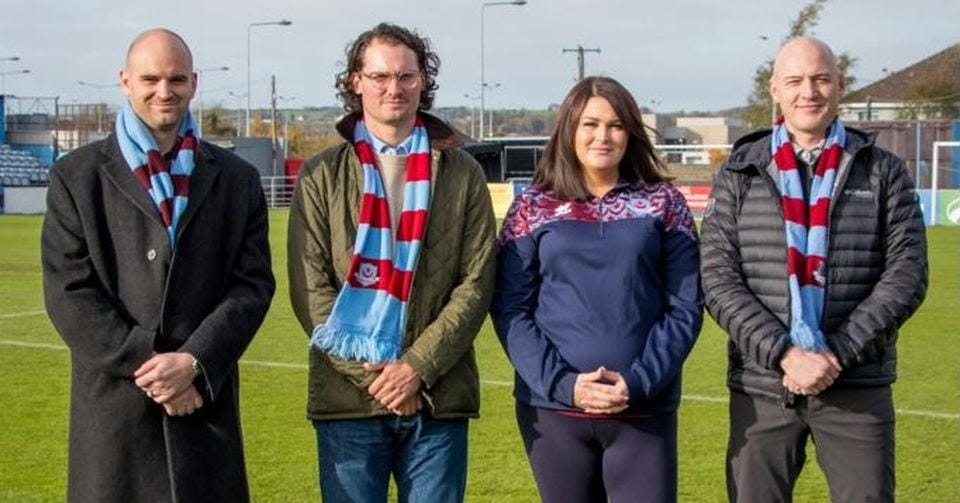
Since the arrival of the Trivela Group ownership structure, the club has increasingly positioned itself around long term sustainability rather than short term noise. The securing of ownership at Weavers Park represented another important structural step because modern football clubs increasingly need control over infrastructure to protect their futures.
That context matters when discussing AI recruitment.
This is not technology for technology’s sake. It is a smaller club trying to modernise intelligently within its limitations.
There is a tendency in football to romanticise improvisation. Irish football in particular survived for decades because communities held clubs together through volunteer culture, local loyalty and resilience. But modern football eventually punishes institutions that cannot scale operationally.
The clubs pulling away are rarely just better coached.
Increasingly, they are simply better organised.Touchline Partners
Touchline Partners

Retro football shirts and enough football nostalgia to financially ruin any sensible person: Classic Football Shirts
Use our referral link for 10% OFF at checkout.
Data Still Needs Human Judgement

None of this means football suddenly becomes robotic.
The clubs who misunderstand data as replacement rather than support usually fail quickest. Recruitment remains deeply human because development itself remains deeply human. Confidence, family support, mentality, emotional resilience and adaptability still shape careers as much as technical quality.
AI can identify patterns. It cannot fully explain ambition.
A model may help narrow recruitment pools or identify overlooked talent profiles, but it still cannot entirely understand how a teenager responds to pressure, rejection or setbacks. It cannot fully measure personality within dressing rooms or explain why one player improves dramatically while another stagnates.
That is why the best operators in football blend information with instinct rather than choosing between them.
The old image of the experienced scout still matters because context matters. Football people still recognise body language, competitiveness and emotional maturity in ways technology struggles to replicate. But modern football increasingly asks clubs to process far larger volumes of information than traditional recruitment structures alone can comfortably manage.
For smaller clubs especially, that creates a difficult tension.
They cannot afford inefficiency anymore.
The old Moneyball logic still hangs quietly over modern recruitment. Rich clubs can survive mistakes. Smaller clubs need clearer margins. Somewhere, Billy Beane is probably still being blamed every time a sporting director opens Excel. But the central idea remains powerful. Clubs outside football’s financial elite increasingly need smarter systems simply to stay competitive.
In that environment, innovation stops looking experimental and starts looking necessary.
What Drogheda Really Reveals
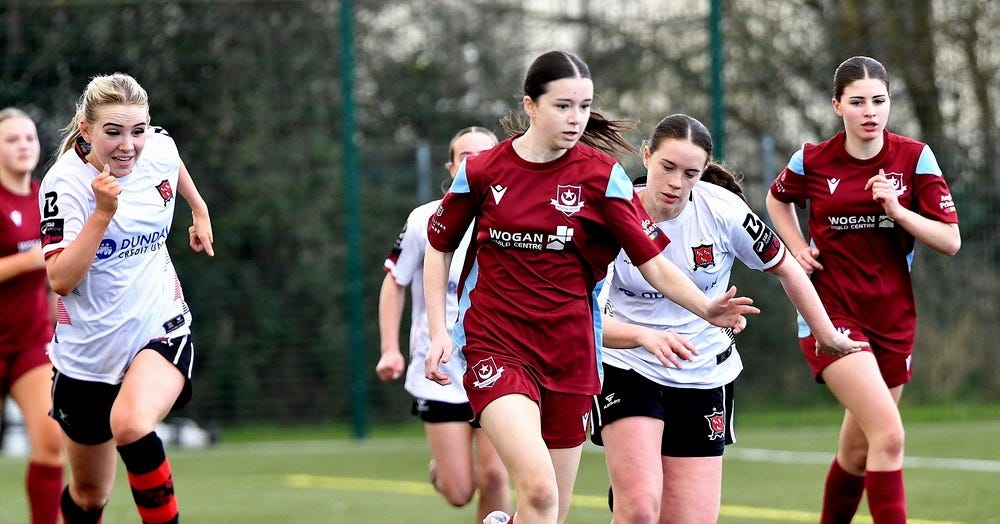
There is something strangely fitting about this story unfolding in Drogheda.
A community club shaped by uncertainty, resilience and reinvention is now experimenting with one of football’s most modern ideas while still existing within all the familiar realities of League of Ireland football. Limited budgets. Volunteer traditions. Infrastructure pressure. Local identity. Survival instincts.
That contrast says something important about where football itself is heading.
The game increasingly asks smaller clubs to behave like sophisticated organisations while still expecting them to preserve the humanity supporters fell in love with in the first place. Clubs are trying to modernise without becoming hollow. They are trying to professionalise without losing place, memory and emotional connection.
That balancing act may ultimately define the future of football far beyond Ireland.
Because the real danger for smaller clubs is not technology replacing people. It is irrelevance replacing ambition. Modern football increasingly rewards institutions capable of identifying talent earlier, organising themselves smarter and building systems strong enough to survive structural inequality.
Drogheda United’s AI recruitment project is therefore not really about artificial intelligence at all.
It is about a smaller football club looking honestly at modern football and recognising that instinct alone no longer scales.
And somewhere in Ireland this weekend, while a parent watches from behind a barrier at an underage match hoping somebody notices their child, a League of Ireland club will also be searching through data points and digital profiles trying to find an advantage hidden inside a game that still insists on feeling human.
That tension probably tells us more about football in 2026 than any transfer rumour ever could.
📲 IF YOU LIKED THIS, YOU’LL LIKE THE REST
LinkedIn: [Touchline Studios]
Instagram: [@touchlinestudios]
TikTok: [@touchlinestudios]
💡 I send the proper pieces through the newsletter. No noise, just football.
James, very interested to read this piece today. I am sitting gathering my thoughts as to how to lead Eyeball's Ai summit that will happen in London next week, so this landing in my inbox was very timely. I think the real issue is the data layer, we are all waking up to the capabilities that the Ai frontier labs are making available, but when it comes to recruitment and player assessment its the data layer that dictates outcomes. The issue in youth football is the lack of quality data, both in terms of its core quality (accuracy) and its depth, breadth and scope. The Ai can only work with what its given as source data. From a personal point of view i think the human element is over rated, the data on human decision making is out there, its not so impressive. When you think about experience, wisdom, know how, a 'keen eye', a 'gut feel' this can all be broken down to data. Human are excellent receptors of data, it is so natural that most decisions are made at a subconscious level, yet the reality is we are simply and constantly recognising patterns in data and reacting accordingly. With the speed of progress being made with the Ai capabilities, I can see how technology can easily answer the questions even before humans manage to articulate the issue. Eyeball's Ai project is going this direction, we have the largest data base in world youth football, and the scope of the new data collection is aimed at digitising context and human wisdom. Happy to hear other peoples views. David