

Benfica: Selling The Future
How Benfica transformed from a people’s club into one of football’s smartest talent export systems without entirely losing the soul that built it

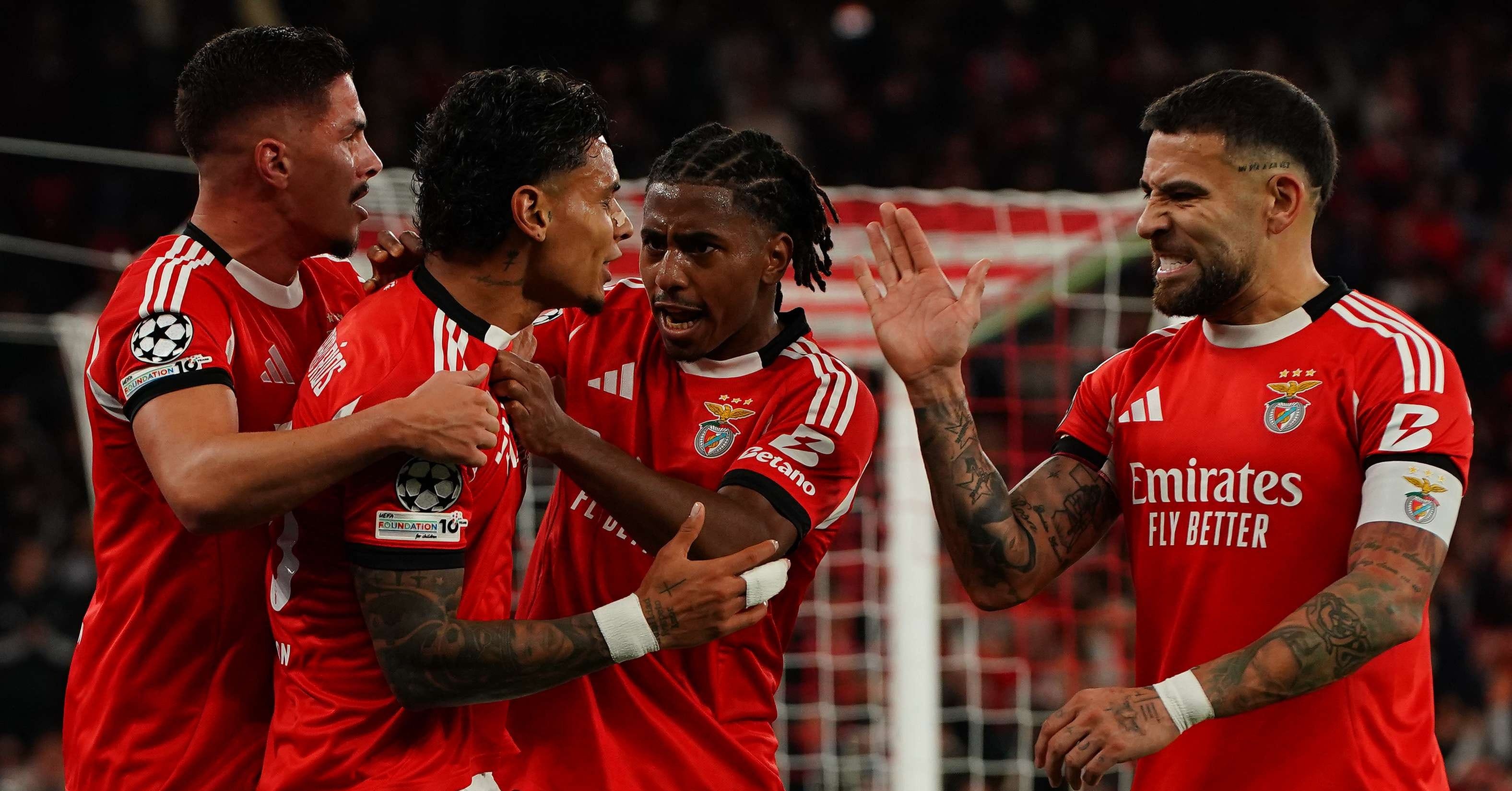
On a warm Lisbon night in 1962, red scarves hung from apartment windows as thousands flooded the streets around the city centre waiting for S.L. Benfica to return home as European champions again. Eusébio stood above the crowd smiling through cigarette smoke and car horns, carrying not only a trophy but the feeling of a country discovering itself through football.
Benfica were never just successful. They were symbolic.
There is an old phrase in Portugal that calls Benfica “o clube do povo”. The people’s club. The club of workers, cafés, ferries and crowded neighbourhoods stretching across Lisbon. During decades of dictatorship and social tension, football became one of the few places ordinary people could still feel visible.
That identity still exists around the Estádio da Luz today. Older supporters still speak about Eusébio with the kind of reverence usually reserved for family members. But modern Benfica also speaks another language now. The language of recruitment models, succession planning, amortisation and resale value.
Somewhere over the last twenty years, Benfica became one of football’s most sophisticated export businesses.
I felt a small glimpse of that reality myself back in 2024 when I had the opportunity to coach alongside members of Benfica’s academy staff. The difference in level was staggering. Not just technically, but structurally. The detail within sessions, the clarity of communication, the organisation behind every exercise and every movement. It did not feel like a club relying on talent alone. It felt like an institution deliberately engineering footballers.
Not because the club abandoned its identity, but because Portuguese football realised sentiment alone could no longer protect anyone from modern economics.
That transformation says almost everything about where football has gone.
I try to explain football properly. The bits that don’t always get talked about.

If you think it’s worth it, you can support it here.
Seixal And The Industrialisation Of Talent

The most important building connected to Benfica is probably not the Estádio da Luz.
It is the Caixa Futebol Campus in Seixal, across the river from Lisbon, where the club built one of Europe’s most efficient talent development systems. Opened in 2006 and expanded aggressively over time, Seixal became the structural heart of Benfica’s reinvention.
Portuguese football understood earlier than many leagues that it could not financially compete with England, Spain or the emerging state-backed superclubs elsewhere. So clubs faced a choice. Become irrelevant, or become specialists.
Benfica chose specialisation.
The academy system evolved into something far bigger than youth development. It became infrastructure. João Félix, Bernardo Silva, Gonçalo Ramos, João Neves and Rúben Dias all emerged from structures designed to produce technically intelligent players capable of surviving elite tactical football from an early age.
But Benfica’s true innovation was economic as much as sporting.
The club realised elite football increasingly pays premiums for certainty rather than potential. Richer clubs do not simply buy talent anymore. They buy reduced risk. Benfica became brilliant at producing footballers who already looked emotionally and tactically prepared for Champions League environments before they ever left Portugal.
That changed everything.
Across the modern era, Benfica have generated well over €1 billion in player sales. João Félix moved to Atlético Madrid for around €126 million in 2019. Darwin Núñez developed rapidly in Lisbon before joining Liverpool F.C.. Enzo Fernández arrived from River Plate as one of South America’s brightest midfield prospects, yet Benfica still managed to accelerate his rise so quickly that Chelsea F.C. paid more than €120 million barely months later.
The pattern became impossible to ignore.
Benfica were no longer simply producing footballers. They were operating as football’s finishing school.
The Cost Of Becoming Too Good At Selling

There is, however, something quietly painful about becoming exceptional at player trading.
Every Benfica supporter now experiences breakthrough seasons differently. Excitement arrives alongside inevitability. The better a player becomes, the louder the transfer rumours grow. Success itself creates instability.
When Rúben Dias left for Manchester City F.C. in 2020, Benfica lost more than a defender. Lisbon-born and academy-developed, Dias represented the type of player supporters imagine captaining the club for a decade. Instead, modern football economics pulled him upward long before that story could fully exist.
That tension sits at the centre of Benfica’s modern identity.
The club’s model is admired across Europe precisely because it works so efficiently. Yet it also reveals football’s widening inequalities. Even historically enormous clubs like Benfica increasingly operate inside a hierarchy shaped by Premier League broadcasting power and concentrated UEFA wealth.
And still, Benfica keep adapting.
Part of that comes from recruitment intelligence. The club’s scouting networks across South America, particularly Brazil and Argentina, have become hugely influential. Benfica rarely behave emotionally in the market. Usually, a succession plan is already developing before the previous player departs.
That level of organisational continuity is what separates functioning football institutions from chaos.
Too many clubs recruit for weekends. Benfica recruit for decades.
Touchline Partners

Retro football shirts and enough football nostalgia to financially ruin any sensible person: Classic Football Shirts
Use our referral link for 10% OFF at checkout.
Between Romance And Reality
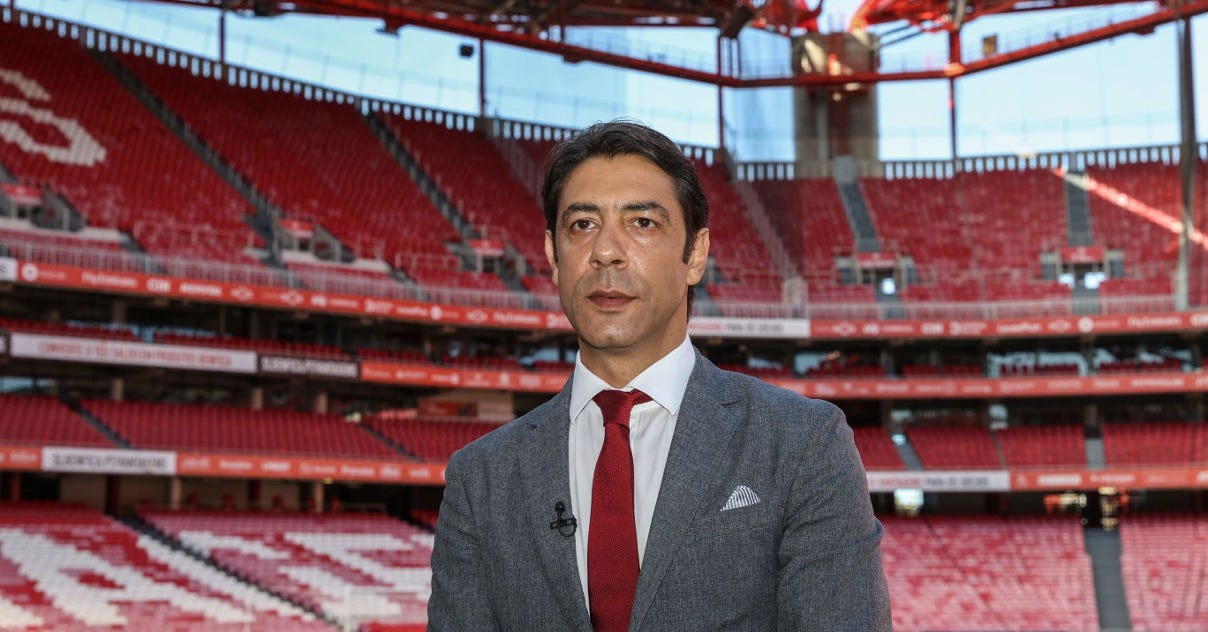
It would be easy to portray Benfica as a cold modern football corporation now. A club transformed entirely into an economic machine. But that misses something essential about both Benfica and Portuguese football itself.
Culture still matters here.
Benfica reportedly maintains one of the largest membership bases in world football. Matchdays around the Luz still feel deeply local despite the club’s global commercial reach. Rui Costa, now club president, symbolises that emotional bridge between Benfica’s past and present. A former player carrying the memory of old Benfica while overseeing the realities of modern Benfica.
That balancing act is what makes the club so fascinating.
Portugal has effectively become one of Europe’s great football export nations outside the top five leagues. Clubs like FC Porto, Sporting CP and Benfica survived not through financial superiority, but through intelligence, adaptability and development infrastructure.
They turned limitation into expertise.
And perhaps that is the defining football story of this century. Not simply who possesses the most money, but who best understands how to survive without it.
Selling Futures, Chasing Memories
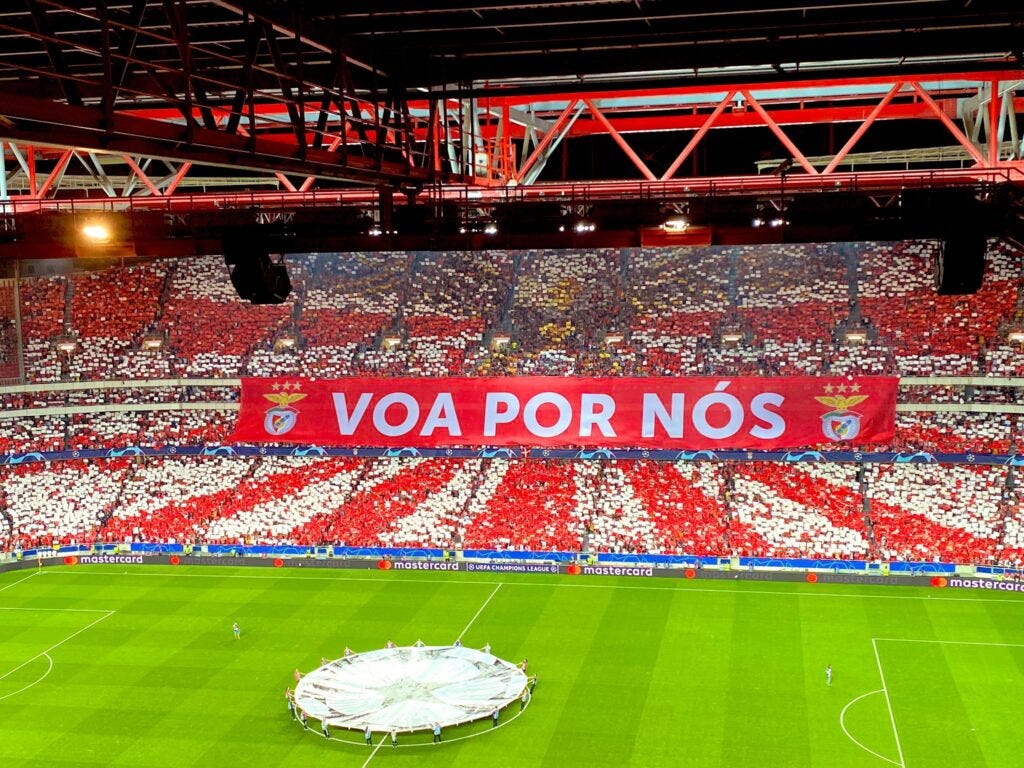
Late at night in Seixal, long after first team matches finish, academy pitches still glow under floodlights. Somewhere another teenager is rehearsing movements that may eventually carry him to England, Spain or Germany. Somewhere another scout is already preparing the next succession plan.
That is the strange beauty of modern Benfica.
The club sells futures for a living while chasing memories it can never quite recreate.
The old Benfica conquered Europe with Eusébio at the centre of everything. The modern Benfica conquers uncertainty instead. Different eras. Different battles. Same red shirts.
And maybe that is football now. Not the disappearance of identity, but the constant negotiation required to keep identity alive.
📲 IF YOU LIKED THIS, YOU’LL LIKE THE REST
LinkedIn: [Touchline Studios]
Instagram: [@touchlinestudios]
TikTok: [@touchlinestudios]
💡 I send the proper pieces through the newsletter. No noise, just football.
As a Benfica fan since childhood, it’s great to see a piece about my club here. That said, Benfica’s management has been far from a model to follow for years now, largely because of Rui Costa and the people around him.
We sell players out of necessity because we spend heavily and constantly need to cover costs that are simply too high. Contrary to what many people abroad seem to believe, our hit rate in the transfer market is actually quite poor. We regularly sign players who have to be moved on just a season later, sometimes for less than what we paid for them.
We've also been fortunate to benefit from some extraordinary sales, whether academy products or players like Enzo Fernández, which have masked a lot of the underlying issues.
The constant managerial turnover does not help either. We change coaches almost every season, sometimes even during the season itself. As a result, the squad is often poorly suited to the manager who comes in next.
The clearest proof that the model is flawed is the outcome of this season: third place in the league and no Champions League qualification.